


How to Make Homemade Sourdough Bread – Step by Step
Aromatic homemade sourdough bread. This recipe uses slow overnight fermentation, which improves the flavor, structure, and digestibility of the bread. There are a few key steps to follow.
Preparing the Starter
Take the sourdough starter out of the refrigerator about 20 minutes before preparing the dough.
Preparing the Dough
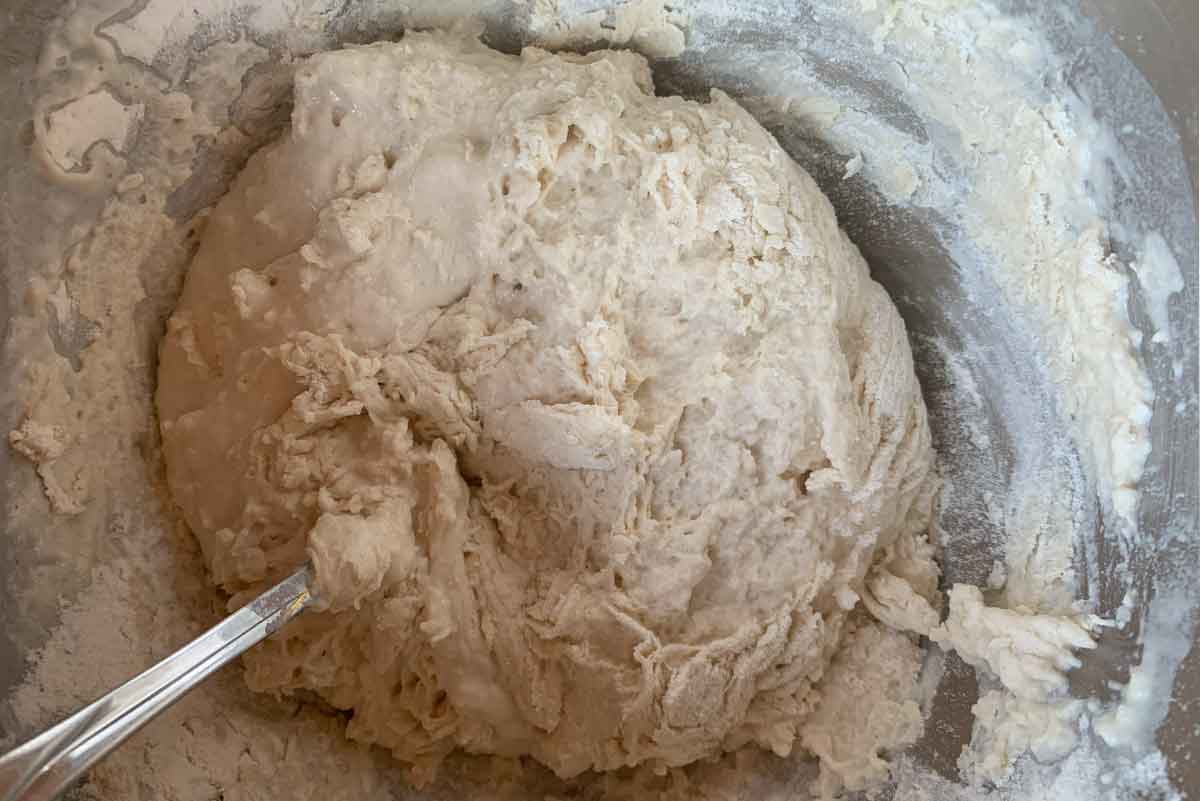
In a bowl, combine the flour, active sourdough starter, salt, and water. Mix until a rough dough forms. Cover the bowl with a cloth or plastic wrap and let it rest for 30 minutes.
Why Sourdough Bread Is Often Easier to Digest
Sourdough bread is often better tolerated by the body because it goes through a slow, natural fermentation process. During this process, lactic acid bacteria and natural yeasts in the starter begin to break down part of the starches and complex carbohydrates in the flour. These microorganisms use the sugars as their “food,” gradually transforming the structure of the dough.
At the same time, fermentation partially reduces phytic acid in the grains, which can improve the absorption of minerals such as iron, magnesium, and zinc. This slow fermentation also leads to a lower glycemic index, because carbohydrates are released more gradually into the bloodstream.
As a result, sourdough bread is often easier to digest, may cause less bloating, and can support a more stable digestive response compared to many breads made with commercial yeast.
|
White Bread with Yeast |
Sourdough Bread |
|
Glycemic Index: 70–85 |
Glycemic Index: 50–65 |
|
This is a high GI because: |
This is a moderate GI, sometimes even lower. |
| Reasons | |
|
The dough ferments for a short time |
Lactic acid fermentation slows the breakdown of starch |
|
Starch remains easily accessible |
Organic acids are produced (lactic and acetic acids) |
|
Glucose is released quickly |
These acids slow stomach emptying and carbohydrate absorption |
Using a Mixer
Let the dough rest at room temperature for 30 minutes. Then use a hand mixer with dough hooks or a stand mixer. Mix on the lowest speed for 4 minutes.
Cover the dough with a cloth and let it rest for 30 minutes. Wet your hands and stretch the dough a few times. Cover it again and let it rest for 30 minutes. Stretch it once more. Repeat this process 3-4 times. Then cover the dough and leave it at room temperature for 4-5 hours, until it roughly doubles in size. You will notice bubbles forming in the dough.
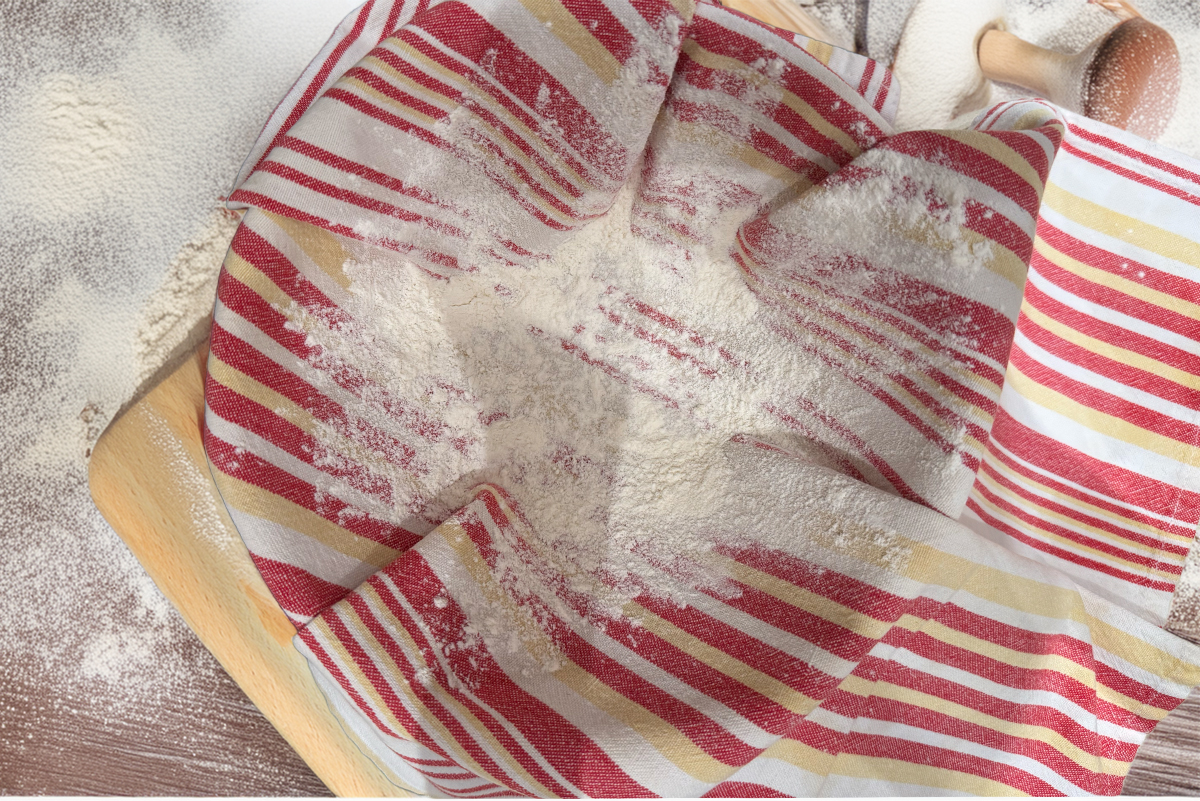
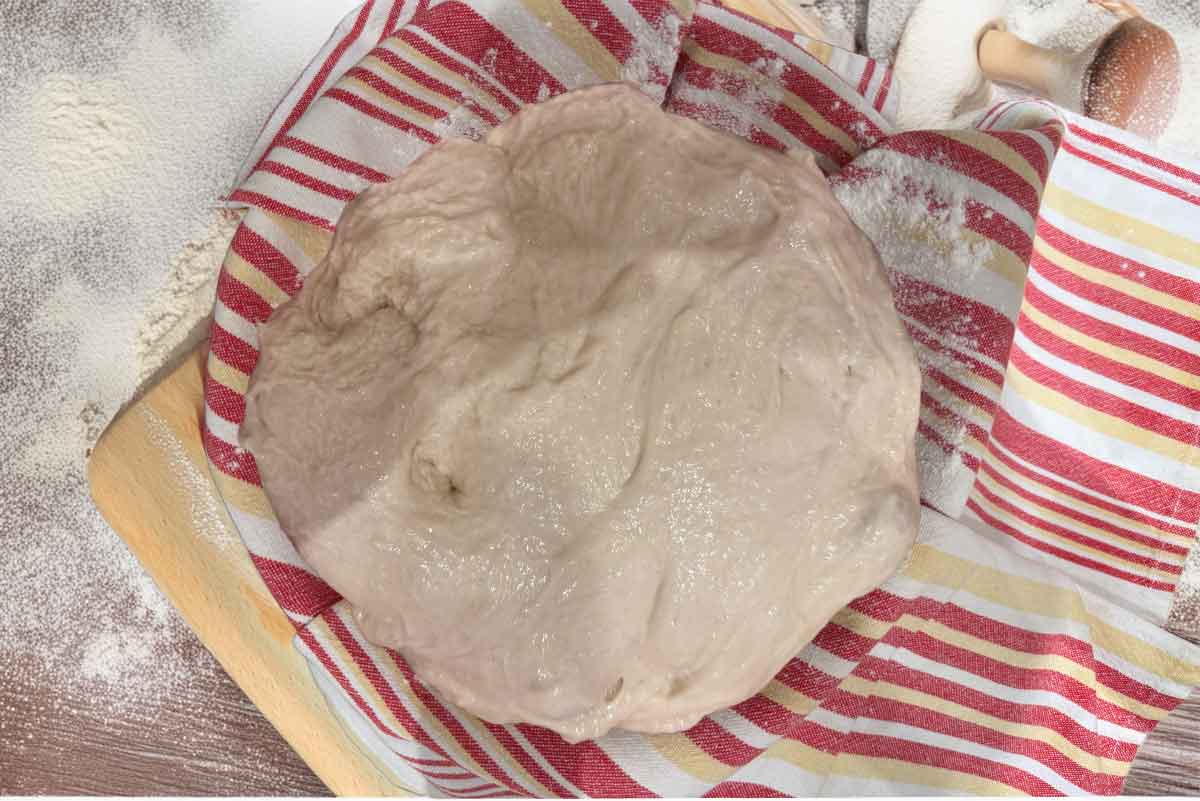
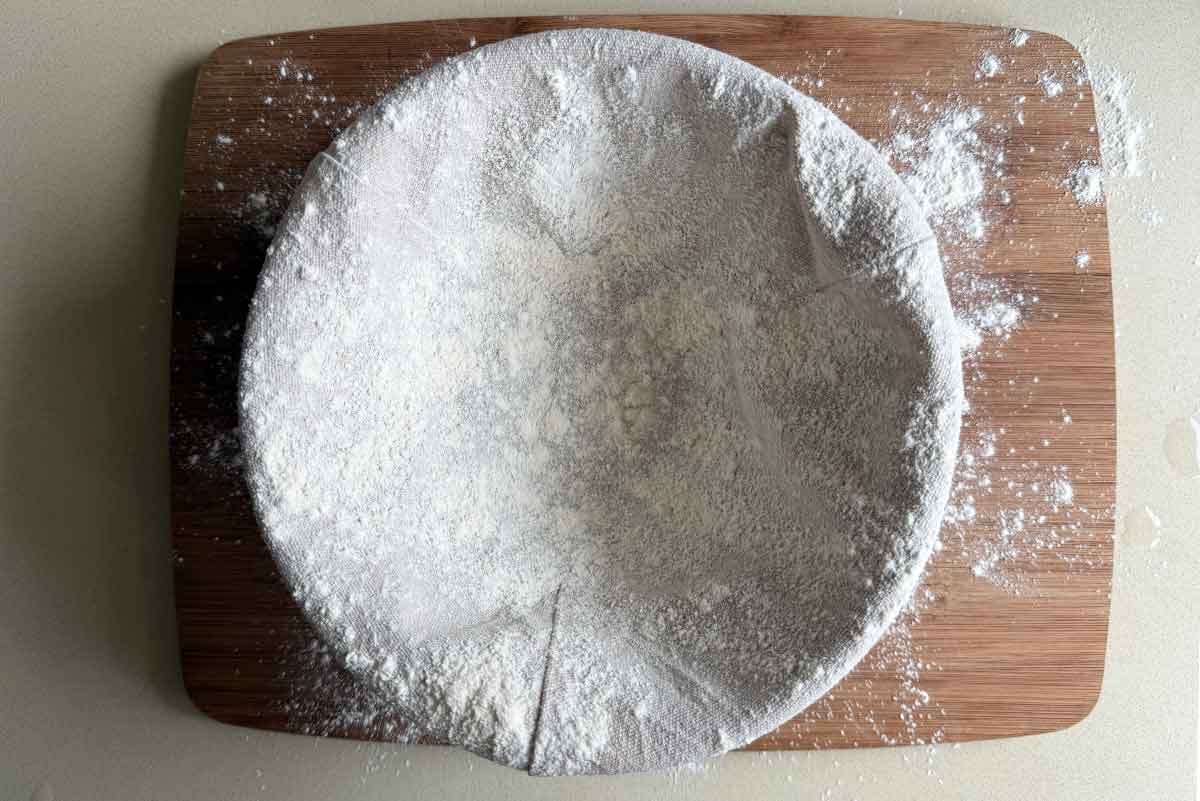
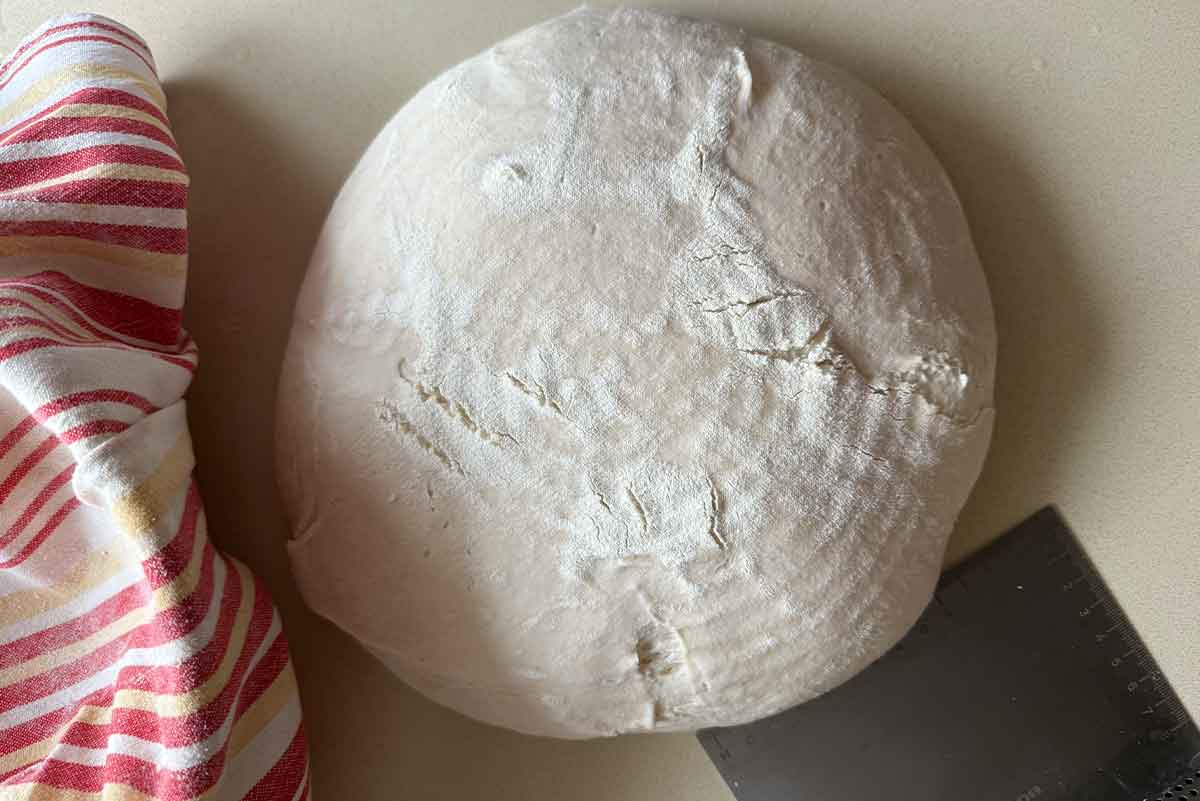
Then transfer the dough to a bowl lined with a kitchen towel generously dusted with flour to prevent the dough from sticking during proofing. The dough is relatively moist, and the flour will help it release easily from the towel.
You can use a regular bowl lined with a towel, or, if you prefer a more traditional look, a bamboo proofing basket (banneton) with a linen cloth. In my experience, there is no significant difference in the quality of the bread-the basket simply gives the process a more beautiful and authentic feel.
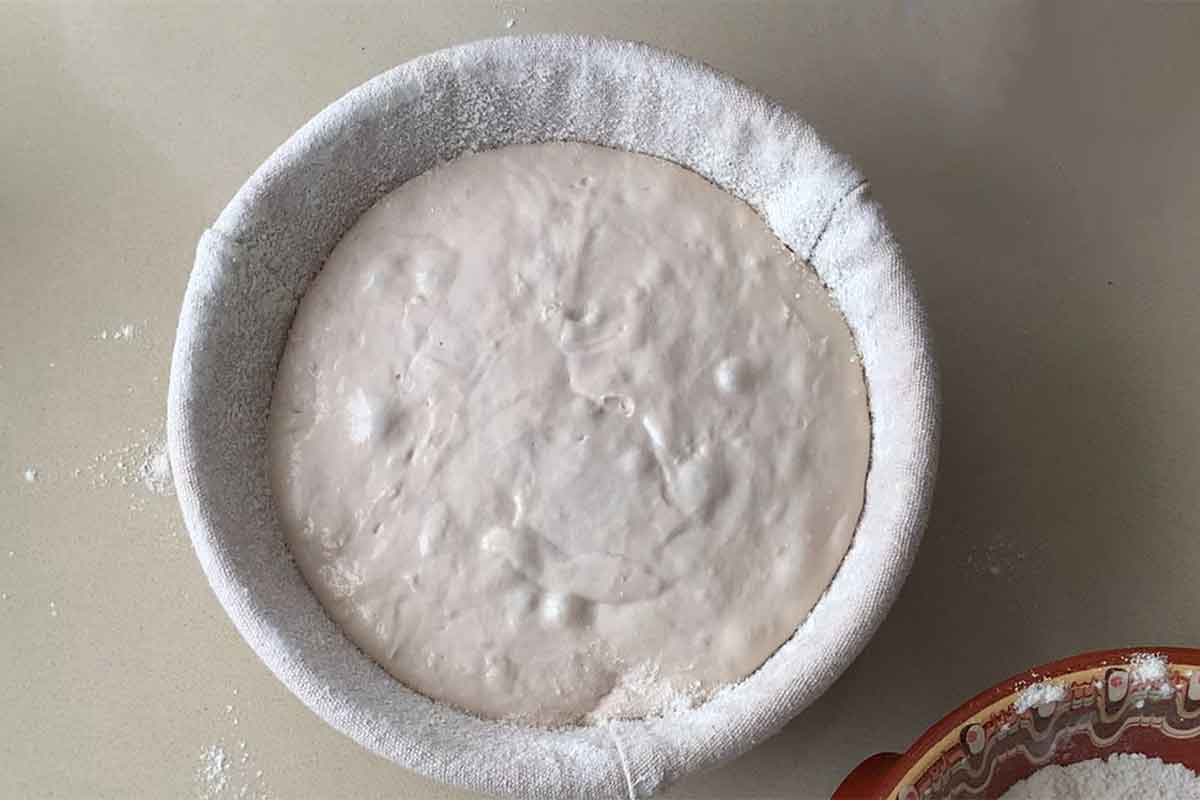
Overnight Fermentation in the Refrigerator
Cover the bowl with plastic wrap and place it in the refrigerator. Placing the already proofed dough in the fridge overnight (known as cold fermentation or retardation) is a common technique in sourdough baking. It offers several advantages:
Flavor development: Cold temperatures slow down yeast activity without stopping it completely. This allows more complex flavors to develop, resulting in a richer and more distinctive sourdough taste.
Better texture: A longer fermentation leads to improved gluten development and a better crumb structure.
Easier handling: Cold dough is more stable and easier to shape, especially when working with high-hydration dough. It also makes scoring the bread before baking easier and more precise.
Convenience: Overnight fermentation fits easily into a home baking schedule—the dough ferments overnight and you bake in the morning.
Baking performance: When cold dough goes directly into a hot oven, it often produces a stronger oven spring, because the outer layer sets quickly while the inside continues to expand.
Tips for fermentation
-
Watch the bulk fermentation
Before placing the dough in the refrigerator, it should have completed sufficient fermentation at room temperature. The dough should roughly double in size and show visible bubbles.
-
Timing can vary
Depending on the strength of your starter and the temperature of your refrigerator, the dough can stay in the fridge for up to 48 hours, which gives you flexibility in your baking schedule.
-
Bake directly from the refrigerator
The dough can go straight from the fridge into the oven without returning to room temperature.
Suggested Schedule
Activating the Starter
10:00 – Take the sourdough starter out of the refrigerator.
10:30 – In a bowl, mix the flour, starter, water, and salt with a spoon. Cover with a cloth and let it rest for 30 minutes.
11:00 – Use a mixer on speed 1 for 4 minutes to knead the dough. Cover the dough loosely with a cloth or plastic wrap.
Stretch & Fold
11:00 – Leave the dough at room temperature.
11:30 – First stretch & fold
12:00 – Second stretch & fold
12:30 – Third stretch & fold
13:00 – Fourth stretch & fold
First Rise (Bulk Fermentation)
This usually takes 4- 8 hours, depending on the room temperature and the strength of your starter. The dough should increase in volume and develop visible bubbles. If you gently shake the bowl, the dough should have a thick, jelly – like texture.
Second Rise (Proofing)
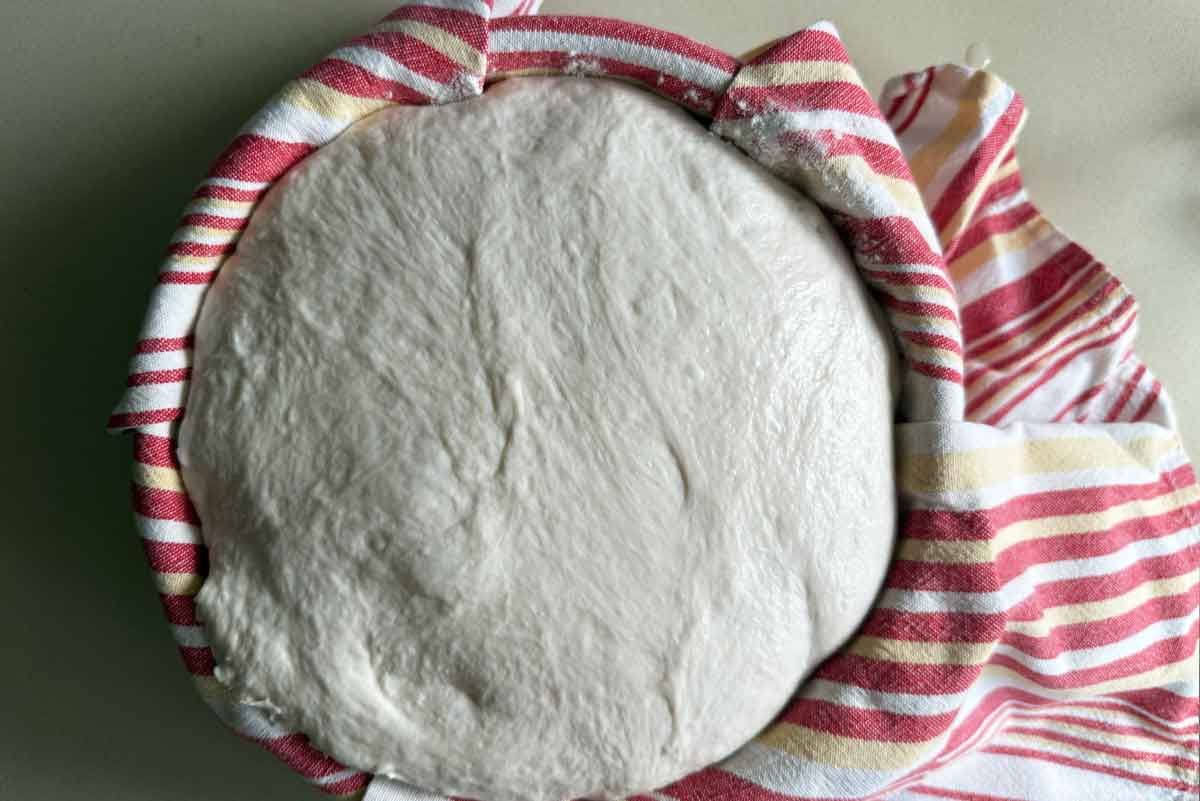
Prepare a bowl by lining it with a kitchen towel and generously dusting it with flour. Wet your hands and transfer the fermented dough into the floured bowl. Cover it with plastic wrap or another bowl and place the dough in the refrigerator overnight.
Cold fermentation can last 12 – 48 hours.
The Next Day – Shaping
8:00 (or whenever convenient the next day)
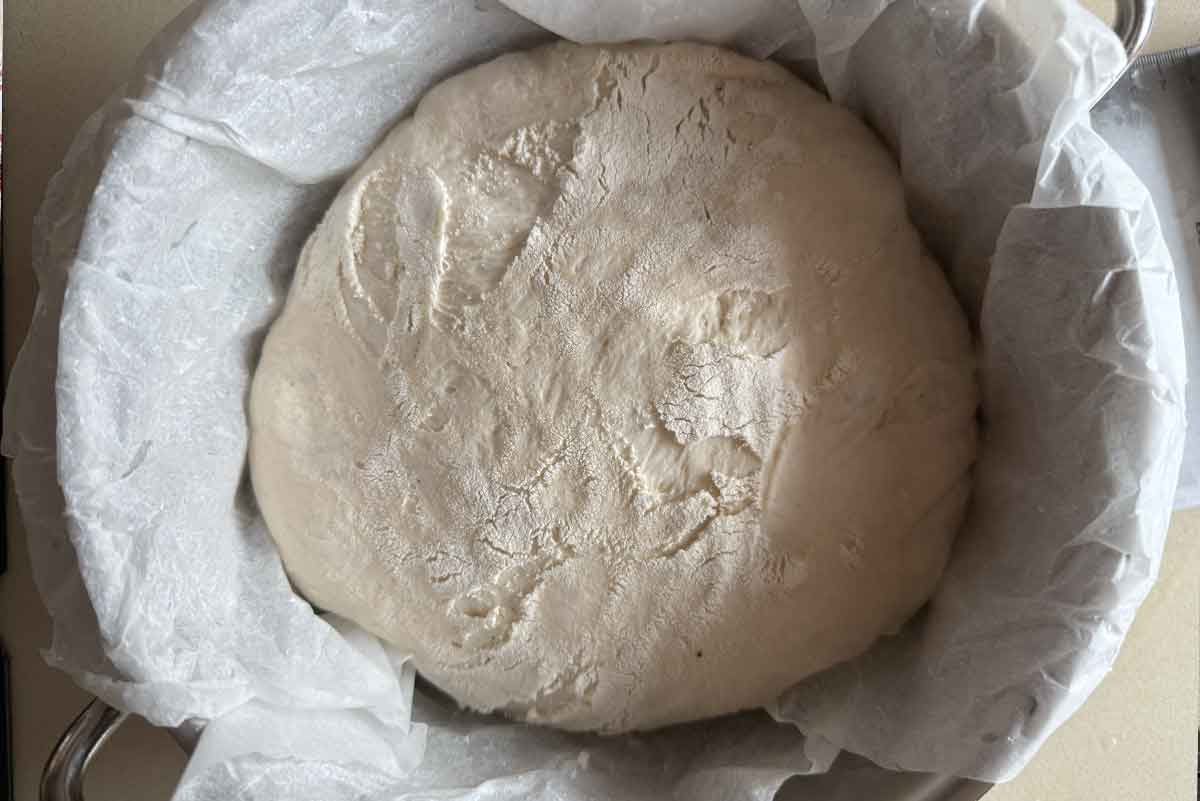
Transfer the dough onto the countertop and prepare your baking vessel. You can use:
-
Regular pot: line it with parchment paper
-
Clay pot with lid: line with parchment paper or simply dust with flour
-
Dutch oven: line with parchment paper and preheat it in the oven for 15 minutes at 240°C
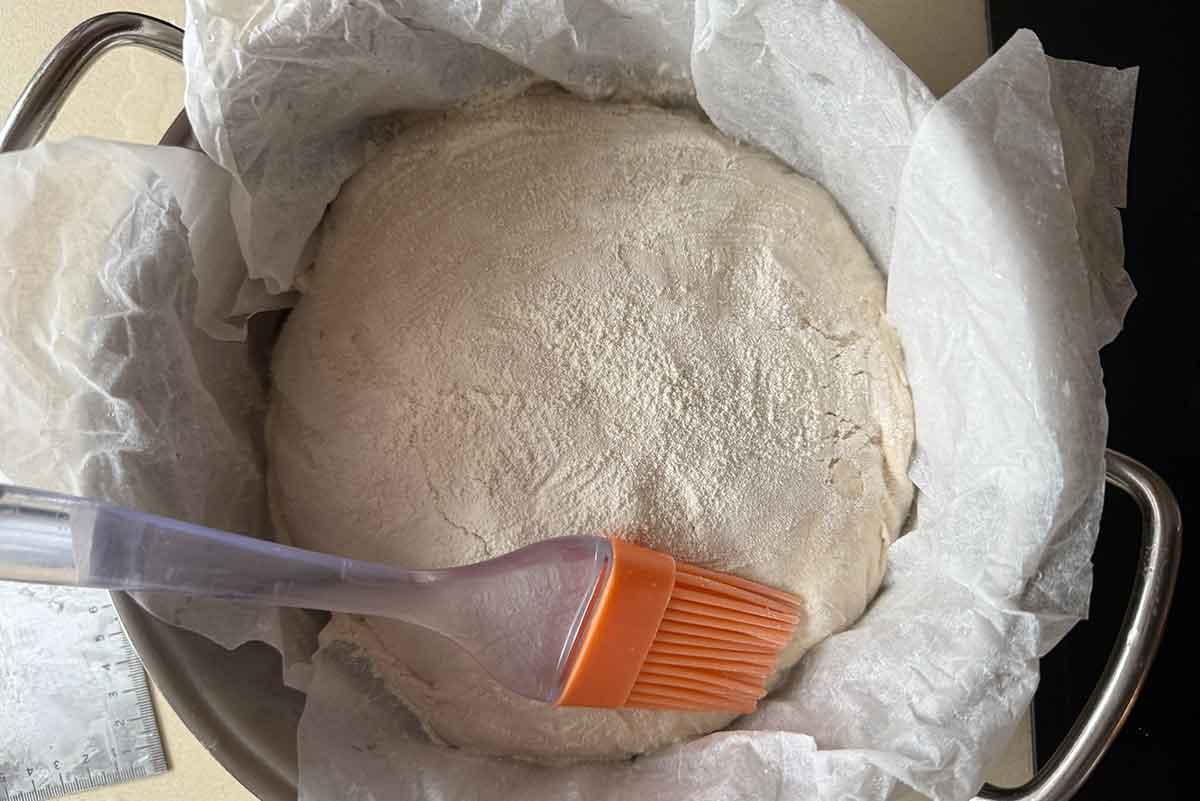
Remove the dough from the refrigerator and gently turn it out of the bowl onto the counter. Wet your hands. Using a spatula, carefully transfer the dough into the baking vessel.
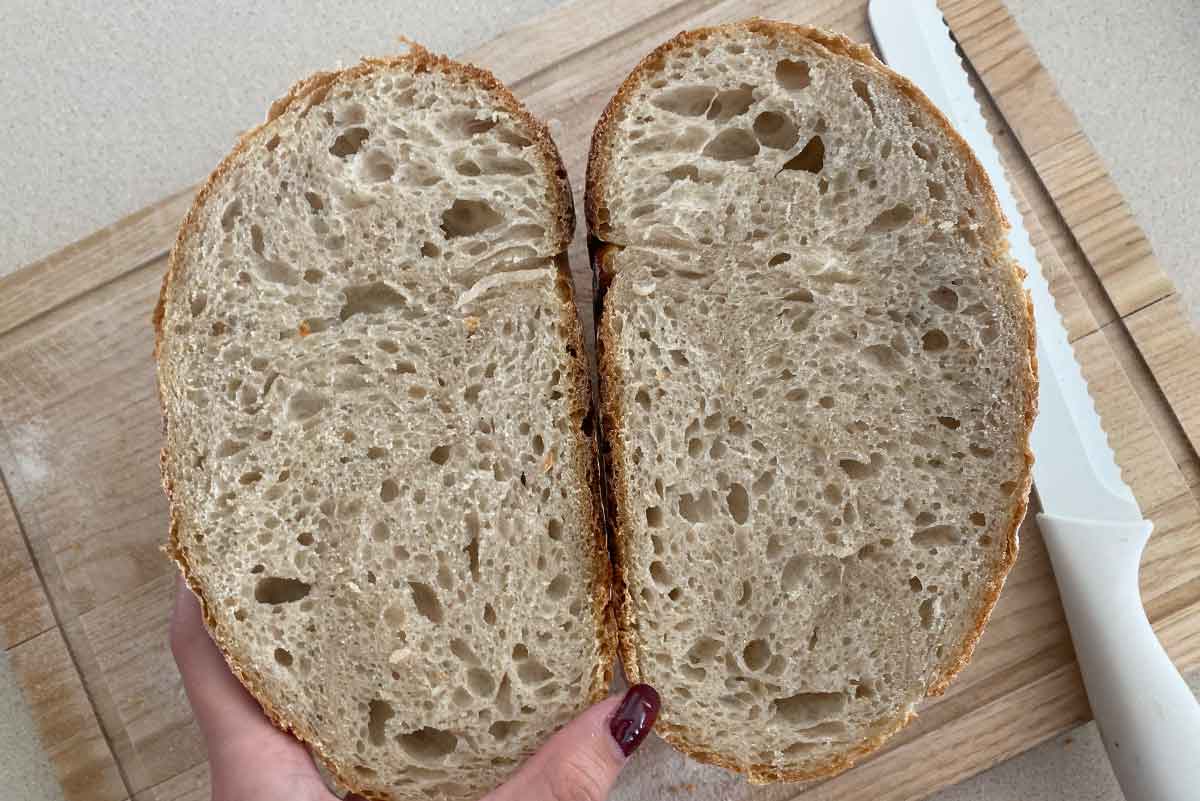
Be careful not to deflate the dough-it is filled with bubbles that will create the open structure of the baked bread.
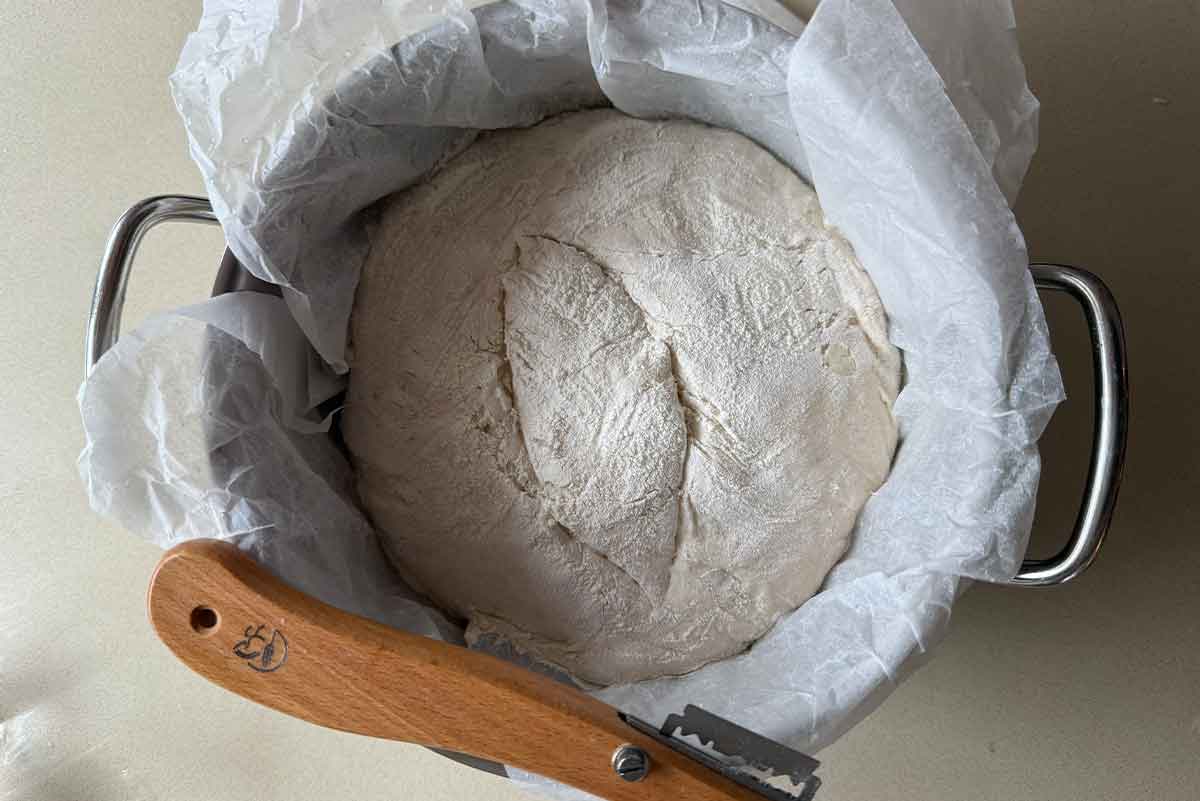
Lightly dust the dough with flour and spread it evenly with a brush. Use a razor blade or sharp knife to make a long score across the dough. As the bread bakes and expands, this score will guide where the loaf opens.
Baking
Oven with Steam Function
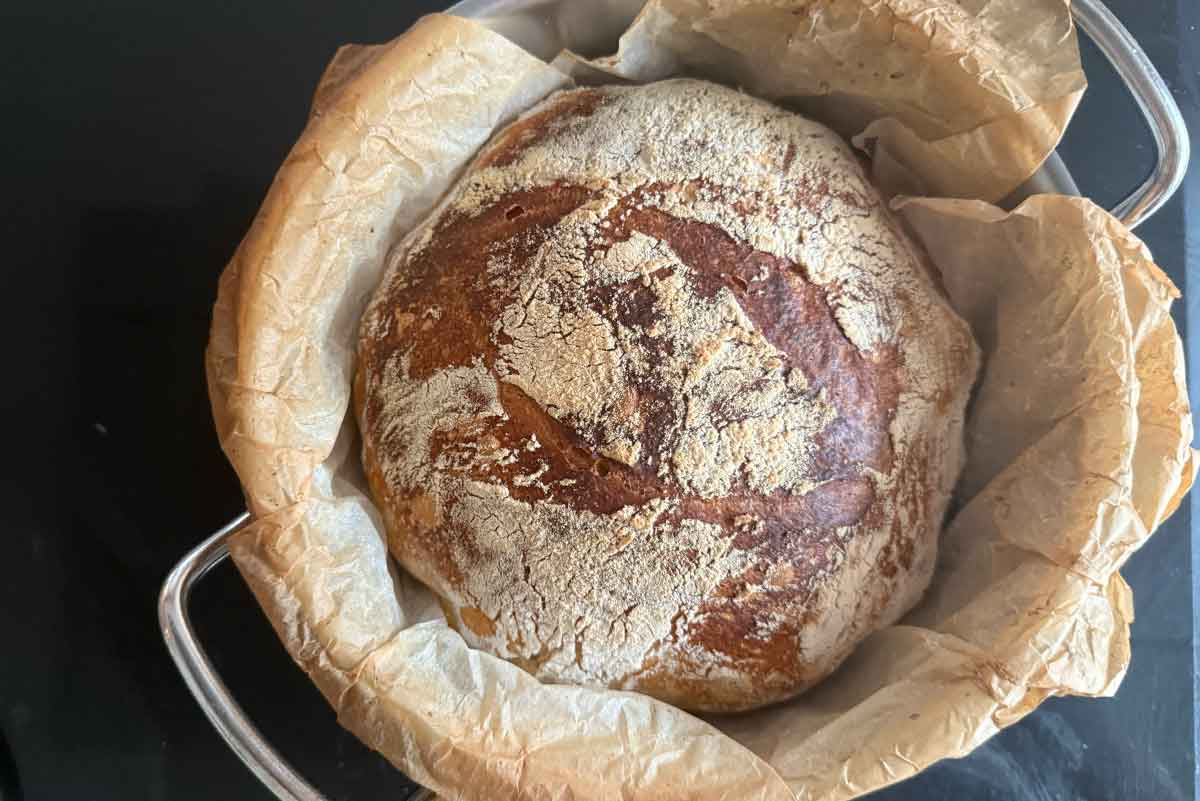
Preheat the oven to 240°C . If your oven has a steam function, use it and set two steam bursts. Place the dough directly from the refrigerator into the oven. Total baking time is about 1 hour and 10 minutes.
Place the clay pot with the lid on in the oven and bake for 20 minutes.
Remove the lid and release the first steam burst. Bake for another 20 minutes.
After 15 minutes, release the second steam burst. After 5 minutes, cover the bread loosely with aluminum foil.
Bake for another 10 minutes.
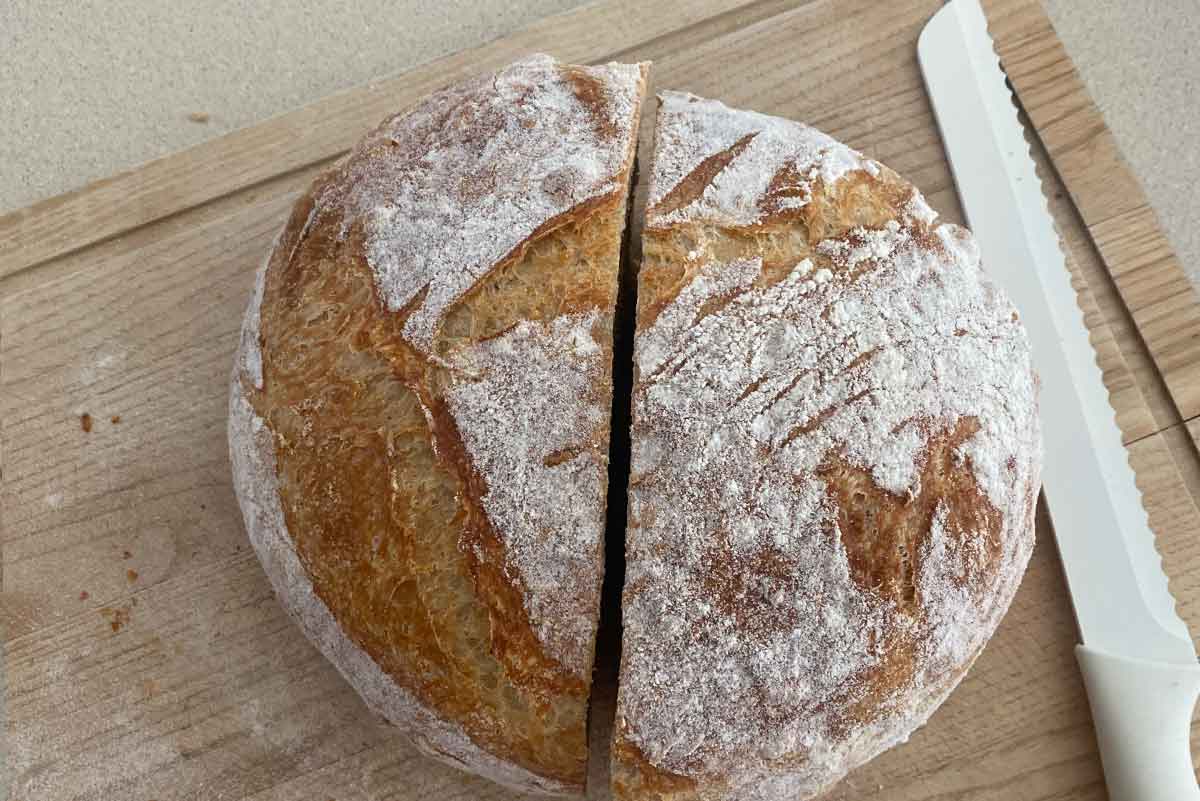
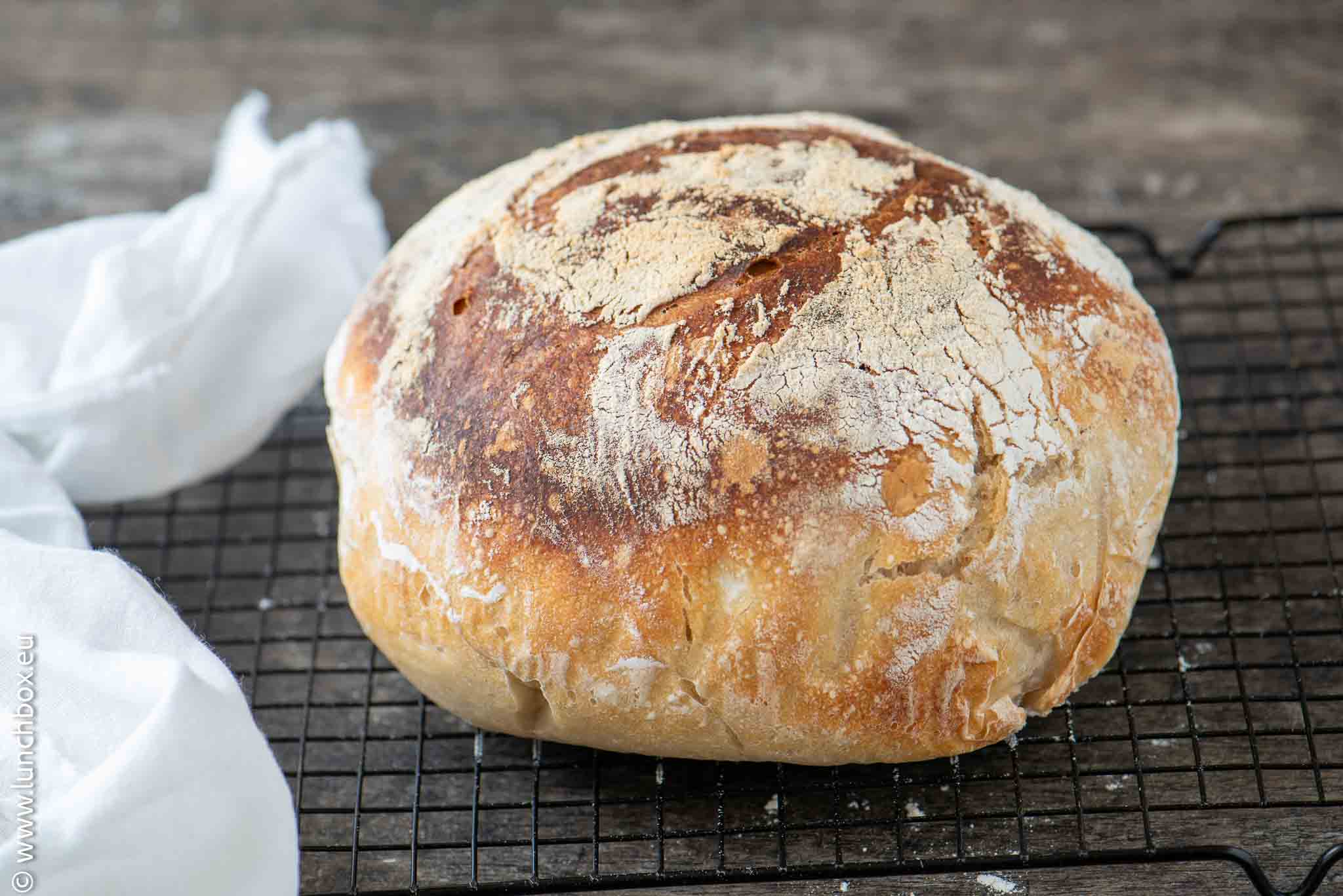
Remove the bread from the oven and place it on a cooling rack. Let it rest for at least 1 hour before slicing.
If you bake the bread in a clay pot without a lid or in a Dutch oven, the bread will usually be ready in about 50 minutes.
Oven Without Steam
Follow the same process, but place a small ramekin or oven-safe bowl filled with water at the bottom of the oven. This will create the necessary humidity during baking.
Baking sourdough bread can be challenging, but it is also an incredibly rewarding process. It often takes a few attempts to achieve the desired result.
The most important things are patience and observation. Watch how the dough behaves at each stage and adjust the process according to the conditions in your kitchen.
Frequently Asked Questions
How long does sourdough bread ferment?
The first fermentation usually takes about 6 hours, followed by a second fermentation of 12-24 hours overnight in the refrigerator.
Can you make sourdough bread without a mixer?
Yes. The dough can develop using only the stretch & fold technique. See the video above. However, it requires a bit more effort.
Why is sourdough bread easier to digest?
The slow fermentation process breaks down part of the starch and gluten and improves the absorption of minerals.




Rate this recipe
1 People Rated This Recipe
Average Rating
No comments yet.